


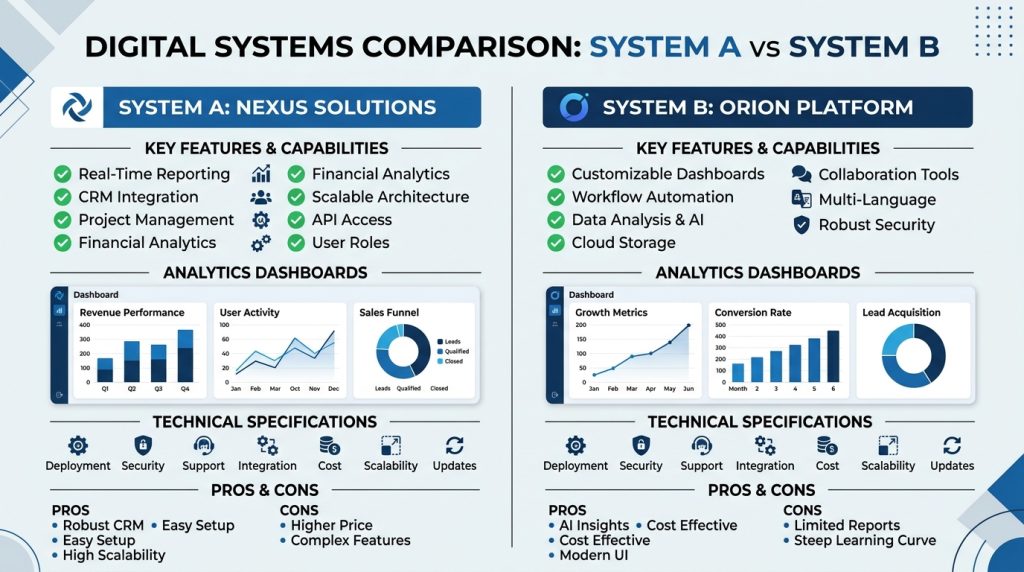
Choosing the right business management system is a critical decision that directly affects efficiency, scalability, and long‑term performance. With the growing number of digital tools available today, companies often struggle to determine whether they need a full ERP system or a simpler software solution. This comparison highlights the key differences and provides a practical checklist to help businesses make an informed decision based on their operational needs.
ERP systems offer a unified platform that integrates finance, inventory, HR, sales, and supply chain operations into one centralized environment. This level of integration is ideal for organizations that require real‑time visibility, automated workflows, and accurate reporting across multiple departments. On the other hand, standalone tools may be suitable for smaller teams that only need to manage specific tasks without the complexity of a full enterprise solution.
When comparing both options, scalability becomes a major factor. ERP systems are designed to grow with the business, supporting expansion, new product lines, and increased operational demands. Standalone tools, however, often reach limitations as the company evolves, leading to data fragmentation and inconsistent processes. Additionally, ERP platforms provide stronger security, better compliance features, and more advanced analytics capabilities.
To simplify the decision‑making process, businesses can follow a structured checklist. First, evaluate the number of departments that require system integration. Second, assess the volume of data generated daily and the need for real‑time insights. Third, determine whether current workflows rely heavily on manual tasks that could be automated. Fourth, consider future growth plans and whether the existing tools can support expansion. Finally, analyze the total cost of ownership, including maintenance, upgrades, and long‑term value.
This comparison demonstrates that while standalone tools may work for basic operations, ERP systems deliver a more comprehensive and future‑ready solution. By using a clear checklist and understanding the strengths of each option, companies can confidently choose the system that aligns with their goals and ensures sustainable growth in a competitive market.